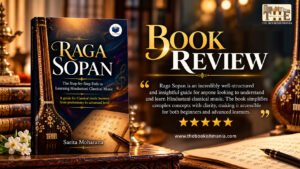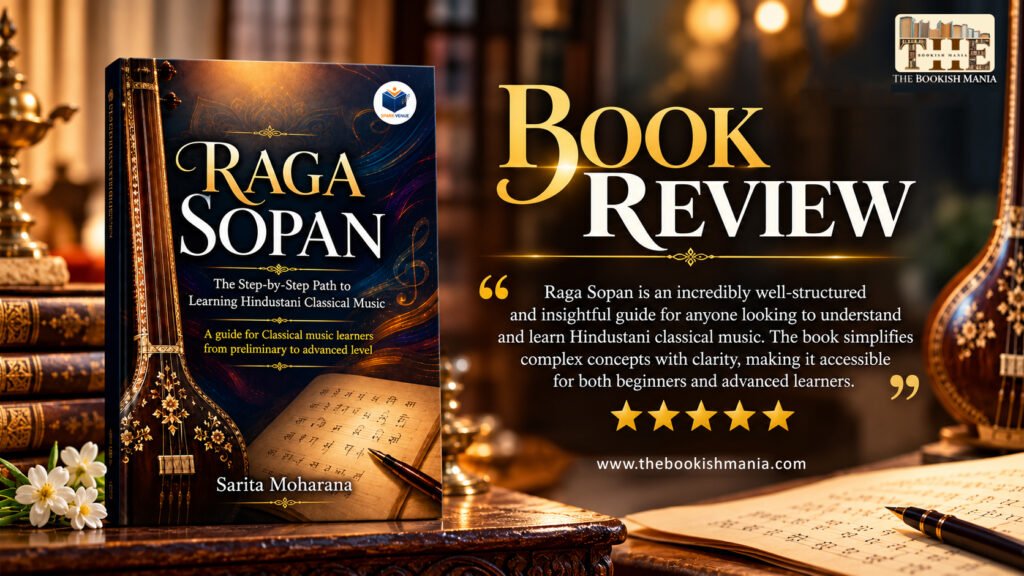
Hindustani classical music is a rich artistic tradition that combines discipline, creativity, emotion and profound musical knowledge. However, for beginners, understanding its technical terminology, melodic structures and rhythmic patterns can often seem challenging. Raga Sopan: The Step-By-Step Path to Learning Hindustani Classical Music by Sarita Moharana seeks to make this intricate musical tradition more accessible through a systematic exploration of its theoretical and practical dimensions.
Spanning 236 pages, the book presents a structured learning resource for students, aspiring performers, music enthusiasts and listeners who wish to develop a deeper understanding of Hindustani classical music. Its central strength lies in its step-by-step approach, beginning with foundational concepts before progressing to individual ragas and important rhythmic cycles.
The opening chapter introduces essential musical terminology, including svara, shruti, saptak, aroha, avaroha, pakad, vadi, samvadi, thaat and tala. These concepts establish the groundwork necessary for understanding how ragas are structured and performed. The explanations also cover musical ornamentation, tempo, rhythm and improvisational techniques, helping readers become familiar with the vocabulary used in classical music education.
A particularly valuable feature of Raga Sopan is its extensive coverage of ragas. The book discusses 55 ragas, including Bhupali, Bhairav, Yaman, Bhimpalasi, Bageshree, Malkauns, Darbari Kanada, Miyan Ki Malhar and several others. Individual raga sections provide information about their musical characteristics, thaat, jati, vadi and samvadi svaras, appropriate performance time, ascending and descending note patterns and characteristic melodic phrases. The inclusion of alap exercises and bandish compositions offers readers a practical reference alongside theoretical explanations.
The book also introduces different forms of Hindustani music, such as Dhrupad, Dhamar, Khayal, Thumri, Tappa, Tarana and Bhajan. By exploring these forms, it helps readers appreciate the diversity of expression within the tradition. Its discussion of talas further broadens the learning experience by highlighting the rhythmic foundations that support classical vocal and instrumental performances.
Another important aspect of the book is its intended usefulness for formal music education. The author identifies students preparing for examinations conducted by institutions such as Akhil Bharatiya Gandharva Mahavidyalaya Mandal, Prayag Sangeet Samiti, Pracheen Kala Kendra and Indira Kala Sangit Vishwavidyalaya among its potential readers. Its organized presentation makes it a useful reference for revision, classroom learning and independent study alongside practical musical training.
Sarita Moharana’s motivation for writing the book is also noteworthy. Drawing inspiration from her two decades of engagement with students, she aims to address the need for a comprehensive resource that supports learners at different stages of their musical development. Her acknowledgement of the Guru-Shishya Parampara reinforces the importance of guidance, disciplined practice and the transmission of musical knowledge.
While a book can provide essential theoretical understanding and structured practice material, the subtleties of raga presentation, improvisation, voice culture and rhythmic accuracy ultimately require listening, regular practice and guidance from an experienced teacher. Read in this context, Raga Sopan serves as a valuable companion to practical instruction.
Overall, Raga Sopan is a substantial educational resource for anyone seeking a structured introduction to Hindustani classical music. By bringing together foundational theory, detailed raga descriptions, practical exercises and tala studies, Sarita Moharana offers readers a clear starting point for exploring one of India’s enduring musical traditions. The book is particularly relevant for music students and dedicated learners who wish to strengthen their theoretical knowledge while developing a lifelong appreciation for the art of raga-based music.
Name: Sarita Moharana
Title: RAGA SOPAN
Book Genre: Hindustani Classical Music
Publisher: Spark Venue Publishing
Amazon Link: Order Now