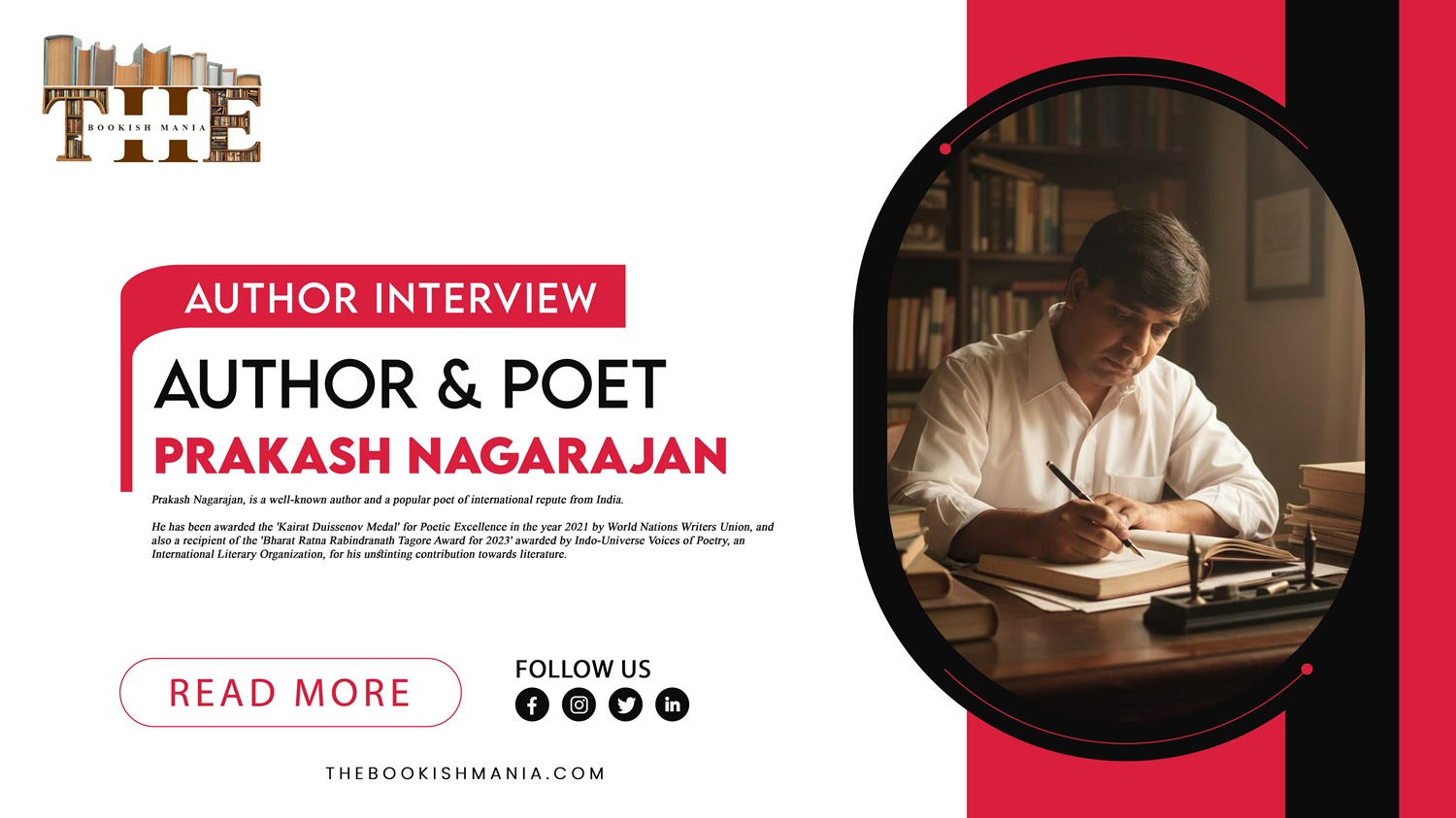
1. What inspired you to bring together two thematically different stories — The Moon-Worshipper & The Business Kinds within a single book?
Ans: Good morning. And thank you for inviting me.
Well, the answer to it is simple and prosaic. Given my limited financial resources, publishing both the novels together was more of an economic decision than anything else.
Both my novels were written at different times, and intended to be published separately.
I had written The Business Kinds sometime between 2018 and 2019 while The Moon-Worshipper had got completed in 2022. Though I had released the e-book versions of both of my novels back then, I just couldn’t muster the funds needed to opt for their regular publication. Almost three years passed by before my wish could finally get fructified.
2. Friendship and destiny play a central role in The Moon Worshipper. Do these relationships draw from personal experiences or observations from real life?
Ans: I would say it is a mix of both.
Personal experiences, observations from real life, tend to leave lasting impressions upon us, and, consciously or otherwise, shape our thoughts and perceptions.
For an author, it usually becomes material for introspection; a calling for deeper understanding.
Further, personally, I deeply believe in Karma. I have always felt our past Karma subtly shape our present circumstances, and as an outcome our intended destiny; but embedded within those circumstances, are also given us the power to make our choices and decisions – to exercise our free will.
So yes, I try to explore and emphasize both these aspects through my writings.
3. Your characters often exist in moral grey zones rather than clear heroes or villains. Is this a deliberate reflection of how you view human nature?
Ans: Yes, I believe no person is wholly good or wholly bad. Largely, we are all products of circumstances.
Someone’s current state, character, or outcome is, to a very great extent, shaped by the external situations, conditions, and experiences they’ve encountered, rather than solely by inherent qualities or personal choices, suggesting a heavy influence from one’s environment or background.
4. In The Business Kinds, migration, poverty, and ambition are portrayed with stark realism. What message did you wish to convey about urban dreams and their consequences?
Ans: Urban dreams of material prosperity and success is more of a pipedream than anything else. For every single story of success that gets celebrated, there are countless stories of failures and heartbreaks that hardly gets a mention anywhere.
Most of the problems of economic disparities, lack of uniform opportunities in our country can be directly attributed to the skewed growth pattern between urban and the rural areas, leading to wider gaps in income, infrastructure, education, and healthcare, causing rural-to-urban migration and increased pressure on urban centres.
These become prime causes of social friction, injustice, reduced economic mobility and continuation of the cycle of poverty.
5. Fate appears as a powerful force throughout the book. Do you believe destiny governs our lives, or do individual choices ultimately shape outcomes?
Ans: I believe destiny is nothing more than an outcome of our past Karma that plays out, and has a governing role in shaping our circumstances at every stage of our lives.
But yes, each of us are also given the power to make our choices and decisions – exercise our free will; to consciously effect changes to our circumstances, and thereby change the course of our destinies.
6. Your writing style is simple yet deeply introspective. How do you balance accessibility with philosophical depth while storytelling?
Ans: Thank you.
Like all the other creatures, as humans, we too are highly complex beings. Woven deep within us are intricate emotional, psychological, physical and mental layers that uniquely define our differences and existence.
But a greater truth is, in spite of all our complexities and differences, within us exists a Supersoul that is immanent, all pervading and which sustains all creation. Once you perceive that philosophical reality, then every other being is the same, despite all our apparent differences.
In simple ways, through my writings, I try my best to bring that reality to the fore .
7. Revenge and forgiveness are contrasting forces in The Business Kinds. How do you personally view vengeance as a response to injustice?
Ans: For ages, resentment, perceived wrongs, anger or a sense of injustice have fuelled the overpowering desire for revenge.
Ideally speaking, vengeance should never be the response to injustice. But sadly, whether we like it or not, we don’t live in an ideal world.
However, in my own view, I would not be averse to witnessing any retribution meted out by the agency of divine interference, wherein ultimately virtue is rewarded and misdeeds are punished. That for me would be true poetic justice – Karma in action.
8. As a poet as well as a fiction writer, how does poetry influence your narrative voice and emotional layering in prose?
Ans: As I have mentioned in the past, both are totally different art forms.
I try to shape or write my poetry in a way, wherein it can find on its own an immediate successful bond between me as a narrator, with my reader … allowing her or him to dwell on it … not just read it.
Poetry is a concise form of expression wherein wordplay, rhyme, alliteration, imagery etc become extremely important in evoking emotions, even while turning ordinary language into an art form .
As a writer of short stories or as a novelist I find, I get an even more or wider leverage to effectively convey my thoughts across. Elements like plot, characters, settings or themes can be presented or explored in a more elaborate way.
Thus, thematic explorations or treatment through novels and short stories vis-à-vis poetry remain largely contrasting and distinct.
9. Your works often reflect Indian social realities while remaining universally relatable. How important is cultural rootedness in your storytelling?
Ans: It remains a very important aspect in my narratives. Our social realities, are but direct of shoots of our ways of living that we adopt with time. But often times it becomes necessary to course-correct when we find ourselves deviating from our life’s calling.
As Indians, we have been bestowed an ancient civilizational legacy that spans over thousands of years. Our cultural traditions, festivals, customs define a way of life that’s spiritual, ethical, all-encompassing and wholesome. They teach us peaceful co-existence, and of a life in harmony with nature, and focuses rightly on inner divinity and universal interconnectedness.
Born within the folds of Sanatana Dharma, it was only natural that I should gravitate towards a Hindu way of life. Having taken interest in theology, I have read extensively other schools of thought as well.
But my findings only reaffirmed my faith in my religion as an appropriate way of living.
Its holistic approach centered on righteous conduct, cosmic balance, and spiritual growth, emphasizing personal responsibility through Karma and reincarnation, the pursuit of life’s goals (Dharma, Artha, Kama, Moksha), and diverse paths to the divine, viewing life as an eternal spiritual journey rather than adherence to rigid dogma rings absolutely true for me.
These values are universal, have timeless appeal, and can never become outdated. So yes, it becomes absolutely vital that we never forget our cultural roots.
10. What do you hope readers carry with them after finishing The Moon Worshipper & The Business Kinds — a lesson, a question, or a reflection on life itself?
Ans: I simply hope that the book gets read as a story well told.
Book Title: The Moon Worshipper & The Business Kinds
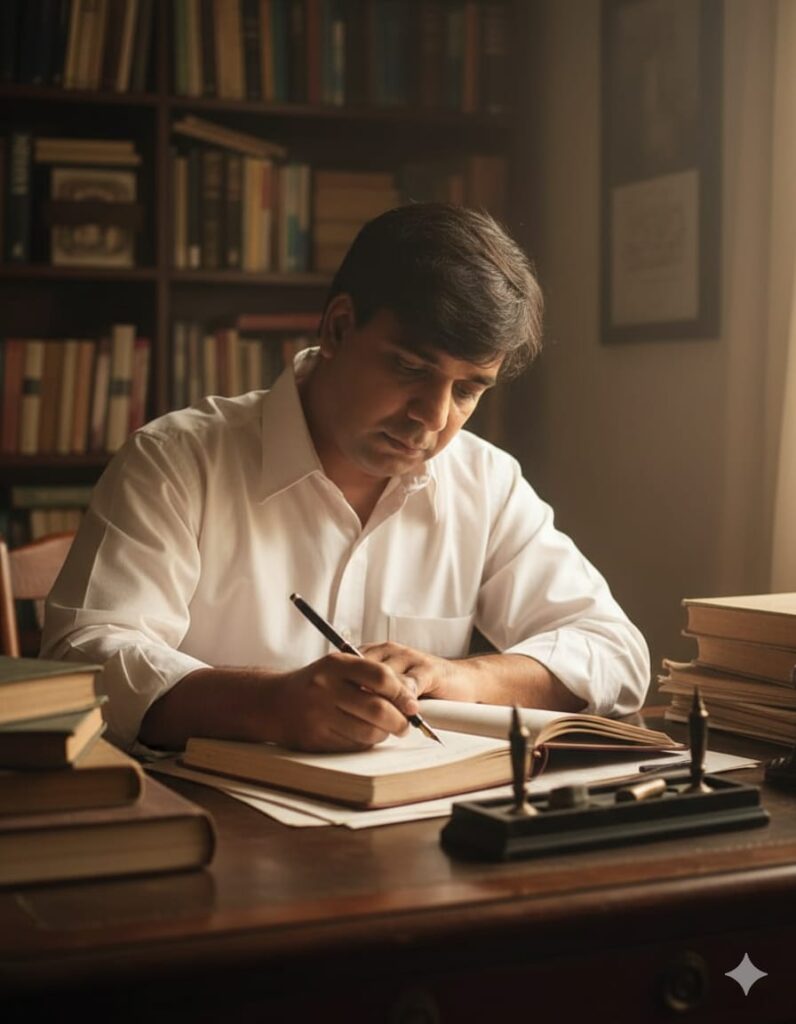
Author: Prakash Nagarajan
Amazon: https://www.amazon.in/Moon-Worshipper-Business-Kinds-Prakash-Nagarajan/dp/9366657214/